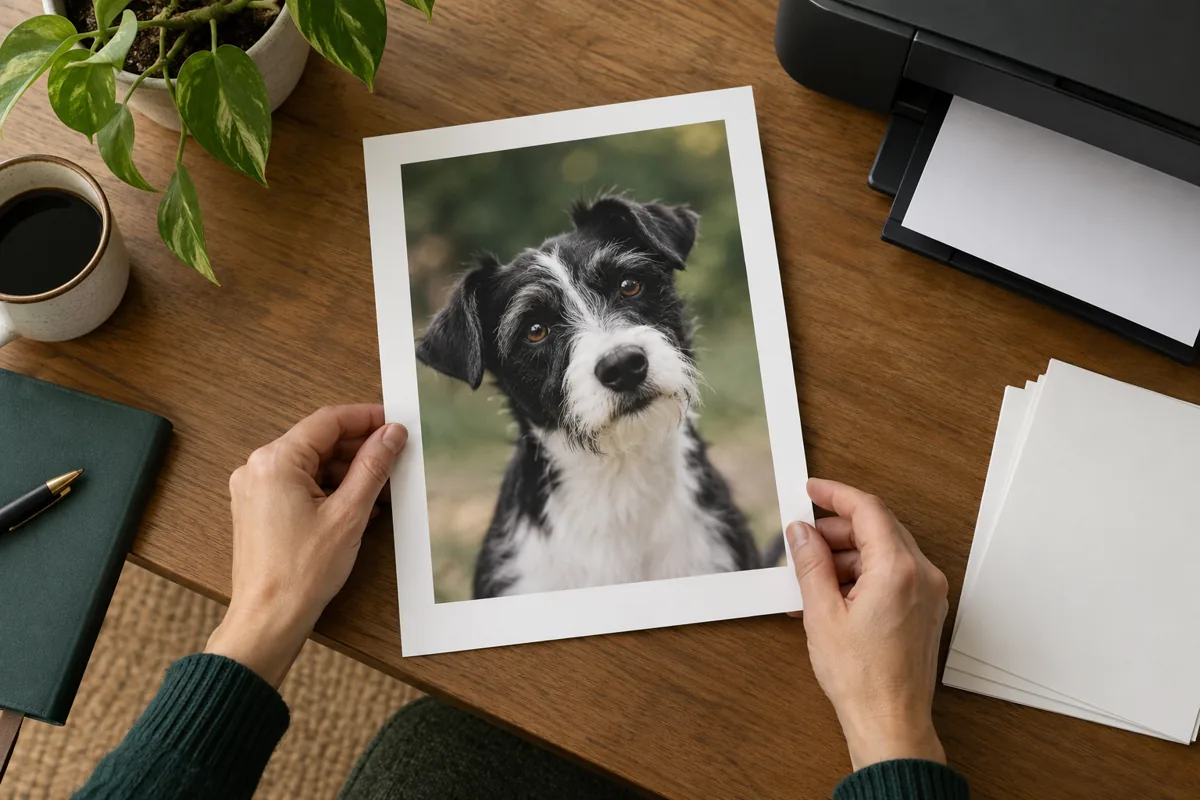
A useful lost-dog flyer answers five questions at a glance: what the dog looks like, where and when they were last seen, how to reach the coordinator, and what a witness should do. Use a large recognizable photo, strong contrast, and a short instruction to report sightings. A decorative design should never compete with the information.
You do not need design software or a paid service to make a readable notice. A basic word processor is enough. The goal is to help somebody recognize a dog and contact the right person safely, whether they see a printed sheet in a window or a small image on a phone.
Start with one clear photograph
Choose a recent picture that shows the dog's coat, body shape, and face. Crop away unnecessary background while leaving distinctive markings visible. If the dog was recently groomed, find a current image or explain that the coat is now shorter. A puppy photograph can be a poor match for an adult dog.
Avoid heavy filters, costumes covering the body, or a collage of tiny photos. One strong image is usually easier to scan. A second photo can help if a marking on the opposite side is important, but it should not make both images too small. Print a draft to see what remains recognizable on paper.
Remove information you do not intend to publish from the picture. House numbers, children, vehicle plates, and location metadata may deserve attention. Keep an uncropped original privately for comparison with finder photos. Do not alter the dog's appearance simply to make the notice look more polished.
Write a headline that identifies the purpose
Use “LOST DOG” as the main headline. It is shorter and clearer than a sentimental slogan. Put the dog's name below if you want it included, but do not assume the animal will answer to that name when frightened. A witness needs a recognizable description more than a long emotional introduction.
In a public description, give approximate size, main colors, and visible equipment. “Small black-and-white dog, red harness” is easier to use than an uncertain breed label alone. Describe known facts. If you do not know whether the dog still wears the collar, say it was worn when last seen.
Use our recovery planning guide to assemble the facts before you design the sheet. Conflicting dates or places across notices can send helpful people in the wrong direction, especially when screenshots continue circulating after a post has been edited.
Make the location and contact easy to find
State the approximate last-seen area with a recognizable cross street or landmark and the city. A neighborhood name alone may be ambiguous in a regional group. Add the date; a notice without one can look current long after the search has changed. Include a time only if it is reliable and useful.
Use one primary contact number that somebody will actually monitor. Ask people to call or text with the sighting location and time. If you use a separate search number, test receiving both calls and texts before printing it. Do not put your full home address on a public flyer just to make the notice seem complete.
Keep the full microchip number and ownership documents private. Withhold a distinctive detail that can help evaluate a finder claim. This is not a perfect fraud safeguard, but it gives you something to compare beyond public facts. Explain to helpers which contact number they should share so multiple informal numbers do not spread.
Tell people what to do with a sighting
A short instruction such as “DO NOT CHASE — CALL OR TEXT LOCATION + TIME” makes the desired response clear. It is especially useful when the dog may avoid strangers. Someone who means well might otherwise run toward the dog, turning a useful sighting into a moving search.
Do not include capture instructions, advice to block roads, or requests to enter private property. Our guide to frightened dogs explains why observing safely can be the most useful contribution. A flyer should invite information, not ask an untrained stranger to take a risk.
If a witness sees an immediate hazard, the relevant local service is the appropriate channel. You can include “For immediate danger, contact local animal services” if space allows. Do not invent a national emergency number for lost-dog recovery, and do not use your personal search line as a substitute for urgent professional response.
Copyable flyer template
The example below is a template, not a real missing-dog report. Replace every bracketed field before sharing. Keep the order, then adjust the photo and type sizes for the page you are printing.
LOST DOG
[Large current photo of your dog]
[Main colors, approximate size, visible marking]
Last seen: [Cross streets or landmark, city] on [Date]
Wearing when last seen: [Collar or harness, if known]
DO NOT CHASE. Please report location, time, and direction.
Call or text: [Monitored contact number]
The description can be brief: “Medium tan dog with white chest; blue collar when last seen.” Avoid adding a long history below it. If there is a handling concern, use practical wording such as “Please keep your distance” rather than a diagnosis you cannot verify.
Check readability before making copies
Use dark text on a light background and enough contrast for the headline and number. Keep body text large enough to read when standing nearby. Do not rely on color alone to signal the instruction; words should remain clear in a black-and-white print. A bright border can help visibility without overwhelming the photo.
Look at the flyer on a phone at normal viewing size. Can you read the number without zooming? Does a square crop hide the date or instruction? Make a separate digital layout if necessary. Include the same information in the post's text so people using screen readers or slow connections can access it.
QR codes are optional. If included, test them and keep the visible number as a fallback. A code may become useless if the destination changes or access requires an account. Avoid sending witnesses to a page that asks for payment or personal registration before they can report a sighting.
Distribute with permission and a record
Ask local veterinary offices, shops, community centers, and other suitable businesses whether they will display the notice. Check local sign rules before attaching posters outdoors. Permission from a business does not automatically authorize posting on nearby public poles, road signs, or street furniture.
Do not obscure traffic signs or place anything where a driver must stop unsafely to read it. Keep a list of approved locations and the version posted. Replace damaged copies when useful and remove them when the search ends. If weather protection is allowed, keep the photograph and number readable through the cover.
For digital sharing, use relevant local groups and follow moderator guidance. Ask people to share the original post where possible. Record the link, posting date, and who can update it. This turns distribution into a manageable communication task instead of a trail of disconnected screenshots.
Update the status without losing the trail
If the last-seen area changes, add a clearly labeled update rather than quietly overwriting the original disappearance facts. Separate “last confirmed sighting” from an unverified report. Ask moderators to help correct widely shared outdated versions when they can.
Once the dog is located, mark the notice accordingly, thank helpers, and remove public contact details where possible. Close official reports as well. Our first-day guide has a coordination sequence you can use while flyers are being prepared.
Make one test copy now
Read the headline, date, description, instruction, and number aloud from the printed page. Ask another person to check the digits against your phone. One accurate, readable master copy is a better starting point than a stack of attractive notices with a small but costly mistake.